The Study
The homework. The research and the math nobody else does: what things cost, what's worth paying for, and how the tools compare. Researched and cited, so you can decide with numbers instead of vibes.

Economics
What it costs to run a vibe-coded app
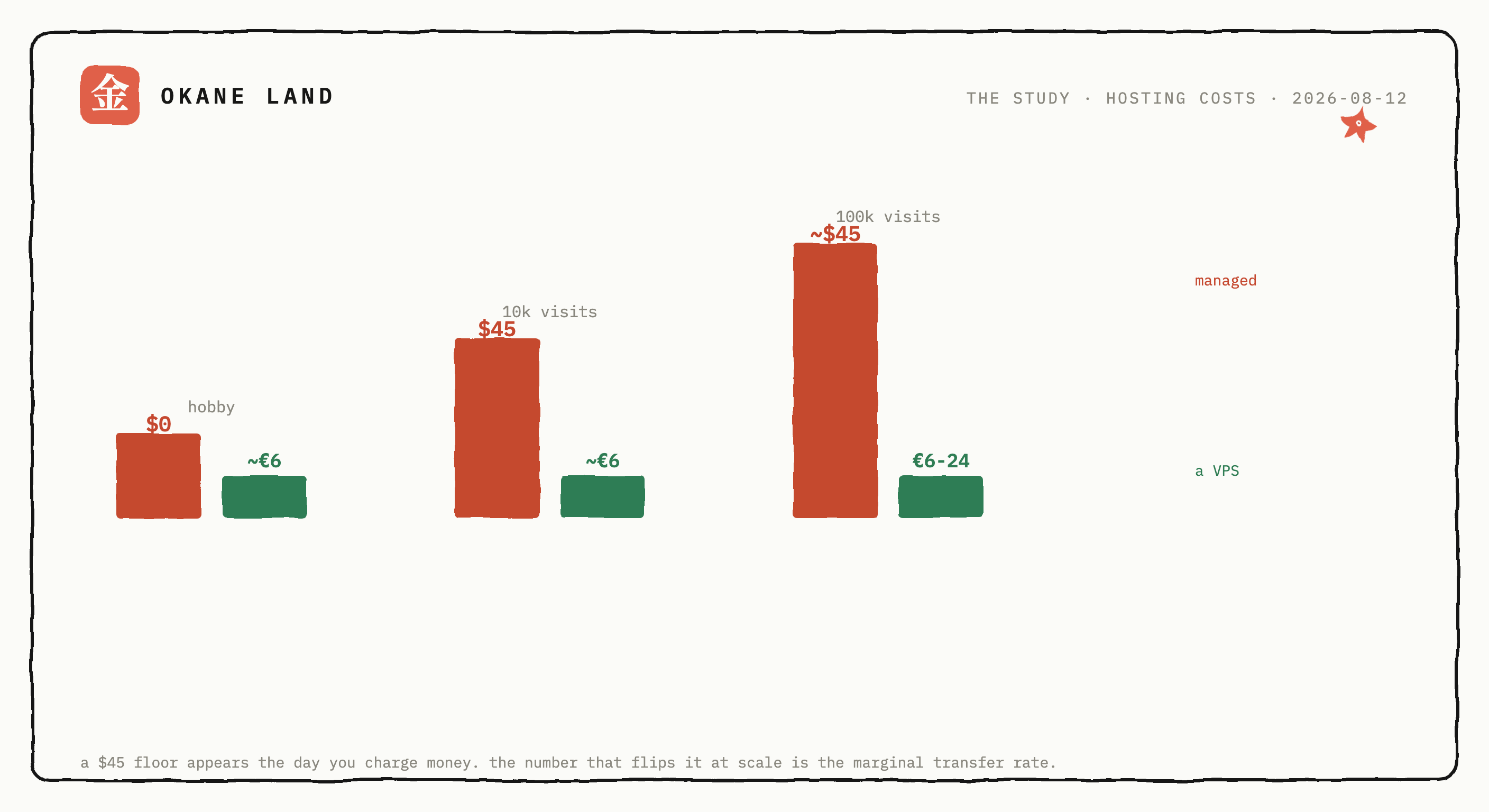
The catalog prices building, pricing, and selling, and never once prices running. The managed default keeps a small app at $0 while it is a hobby, then sets a $45 floor the moment money changes hands. A plain server runs the same app for roughly six euros at every stage. Each side wins a stage, and the number that flips the math at scale is the one nobody quotes: the marginal transfer rate.
Economics
The MCP tax: what each server costs before your first prompt
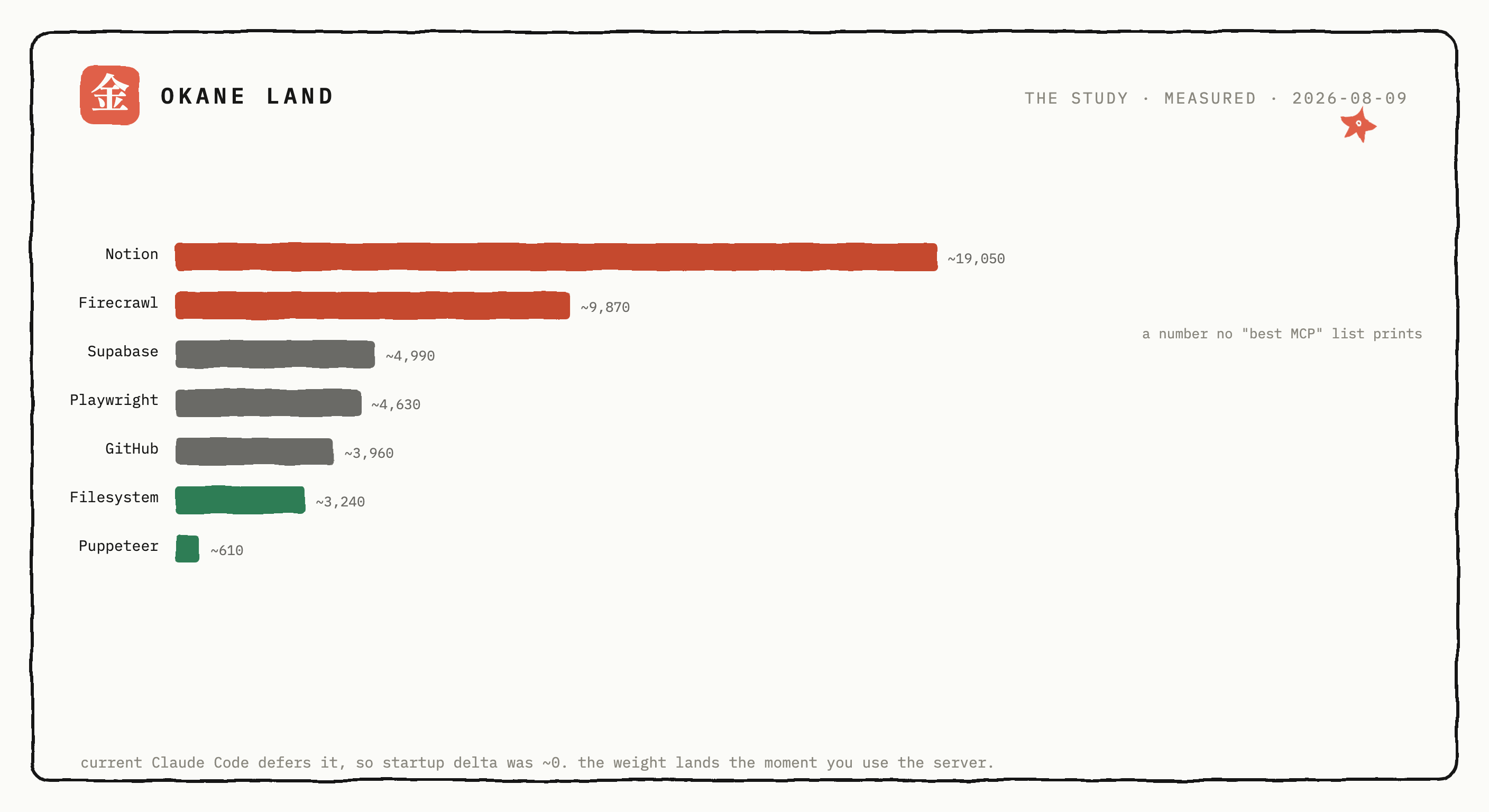
Every "best MCP servers" list ranks what to install and none of them prints what each one weighs. So we measured it: the tool-definition size of ten of the most-recommended servers, and where that weight actually lands now that Claude Code defers it. The tax did not disappear. It moved from startup to first use, and here is the bill per server.
Explainer
Blast radius: what your AI agent can destroy
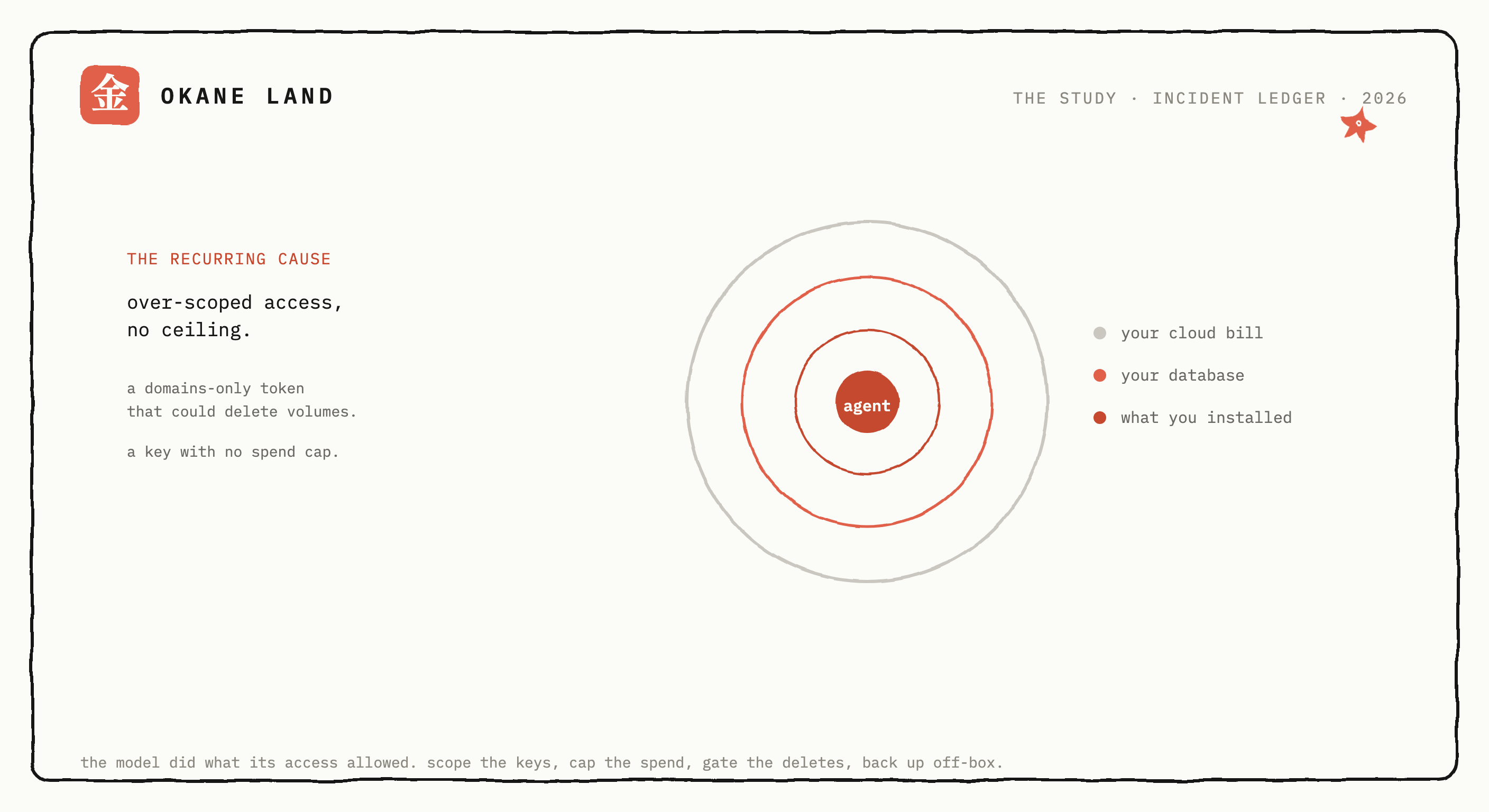
The security question a solo builder actually faces is not only the app they ship. It is the blast radius of the agent holding their keys, and of the MCP servers, plugins, and skills they install on trust. Here is a verified incident ledger in both directions, every entry traced to a primary, each ending in one guardrail that maps to a documented feature.
Economics
The vibe-coding wins are real. So is the denominator
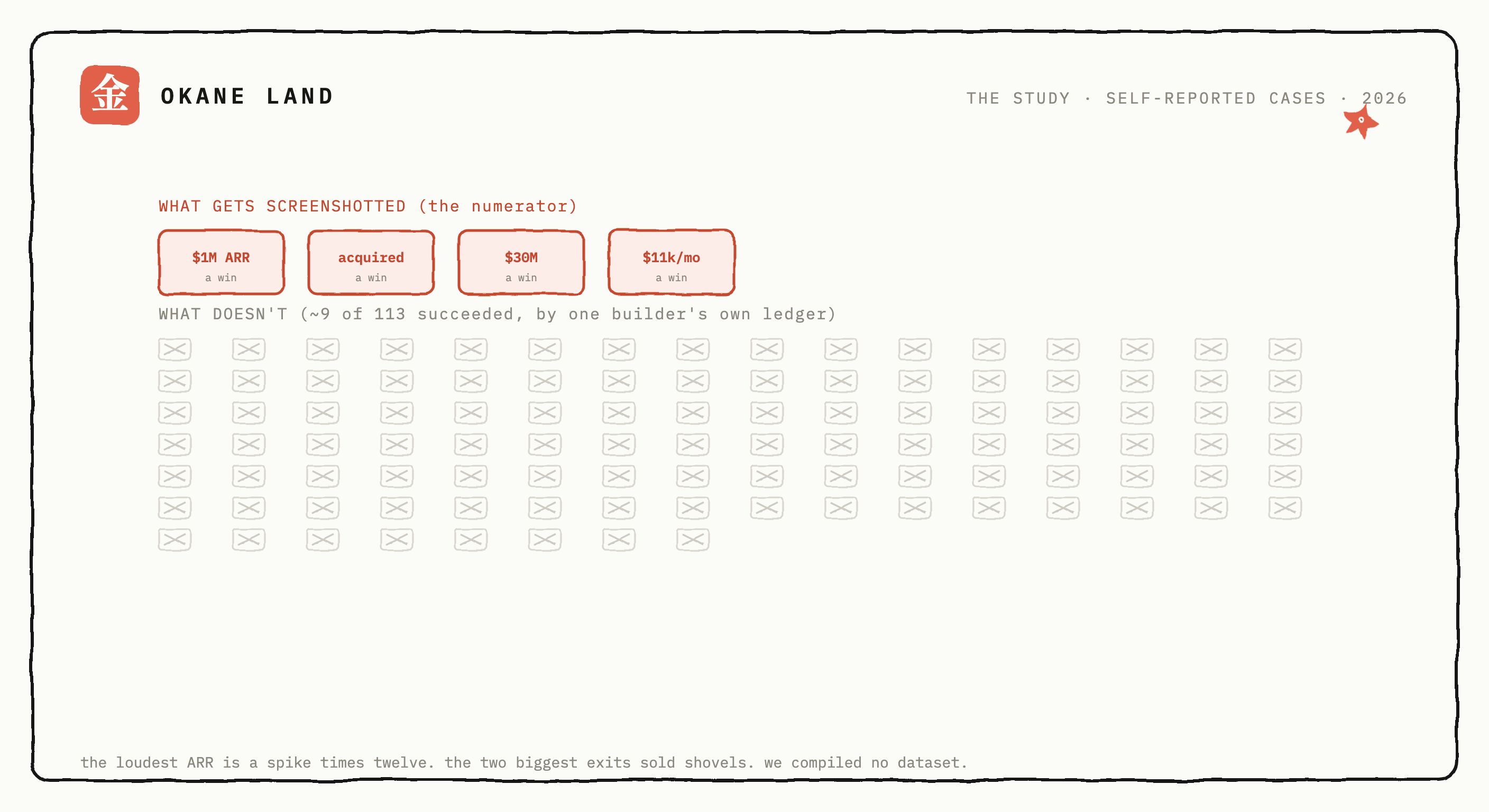
The acquisitions and ARR screenshots are real, and they are the numerator of a fraction whose denominator nobody posts. The loudest figures are annualized viral spikes, and the two biggest "vibe-coding" exits were companies selling the shovels, not products built with them. We did not compile a dataset. We collected the public wins and set them against the one builder who published his own hit rate.
Economics
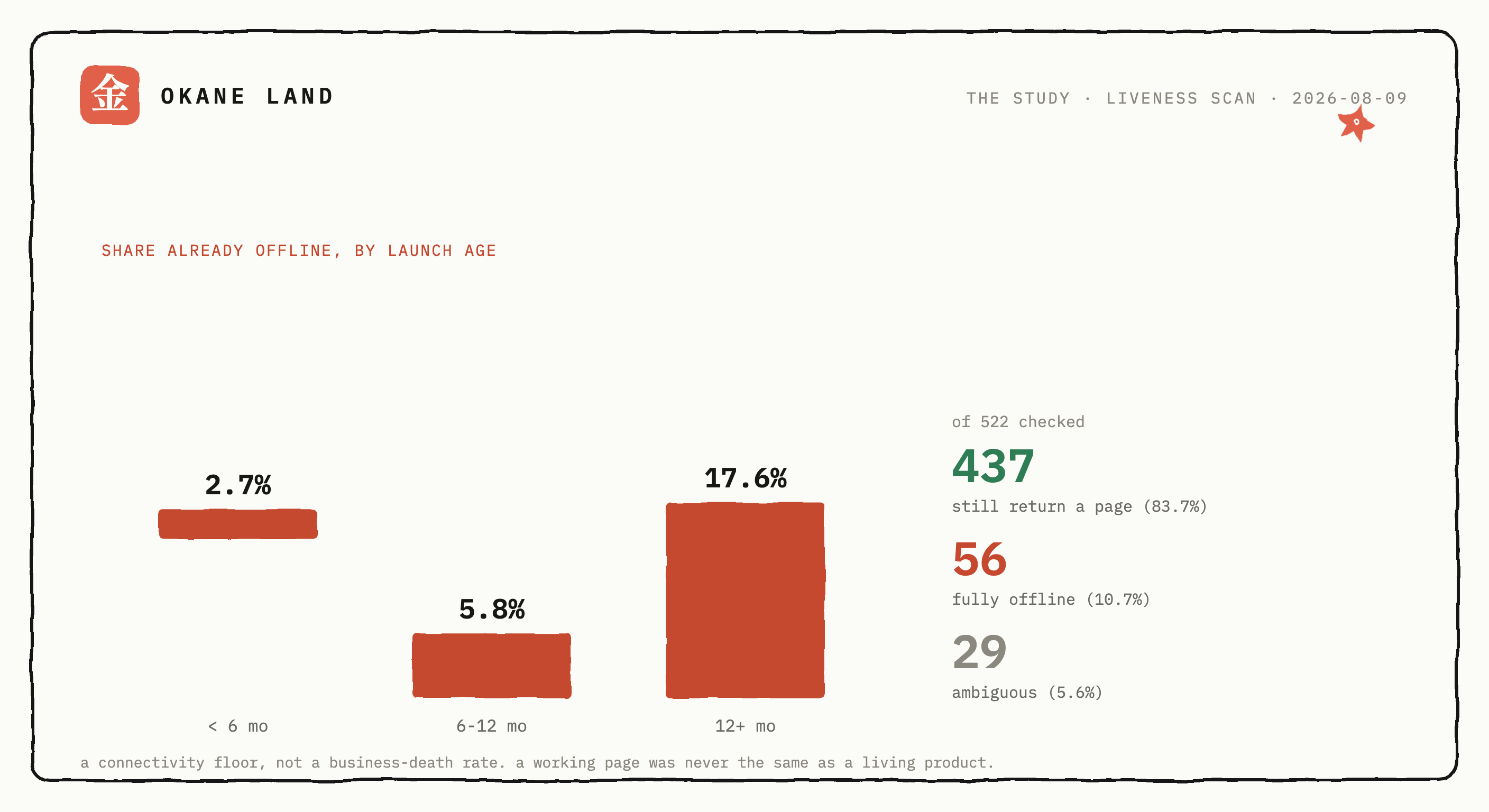
We pinged 522 vibe-coded launches. Here is how many answered
Nobody had actually HTTP-checked whether vibe-coded launches are still online, so we did. We pulled every app from the two showcase directories where every entry is provably built on a vibe-coding tool, pinged 522 of them, and hand-verified the edges. At least 1 in 9 is already dark. That is a connectivity floor, not a business-death rate, and the difference is the whole point.
Comparison
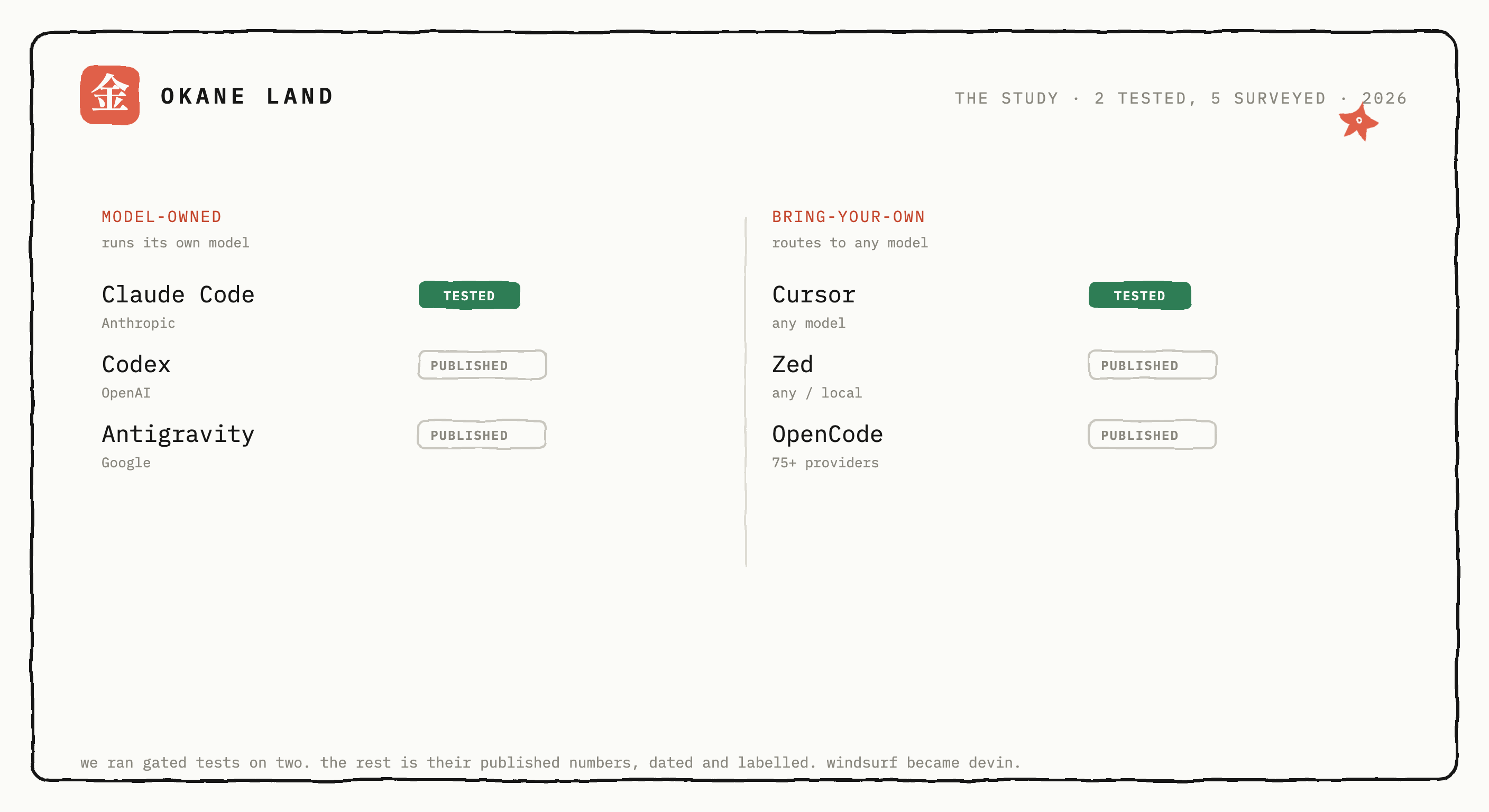
The AI coding agent field guide (2026)
Seven agents, two camps, one decision. The frontier labs now ship their own coding agents whose benchmark numbers cluster in the high seventies to low eighties, while a second camp routes to whichever model you point it at. We have hands-on tested two of these. For the other five we quote the published numbers and say so. Here is how to choose on shape rather than on a leaderboard.
Explainer
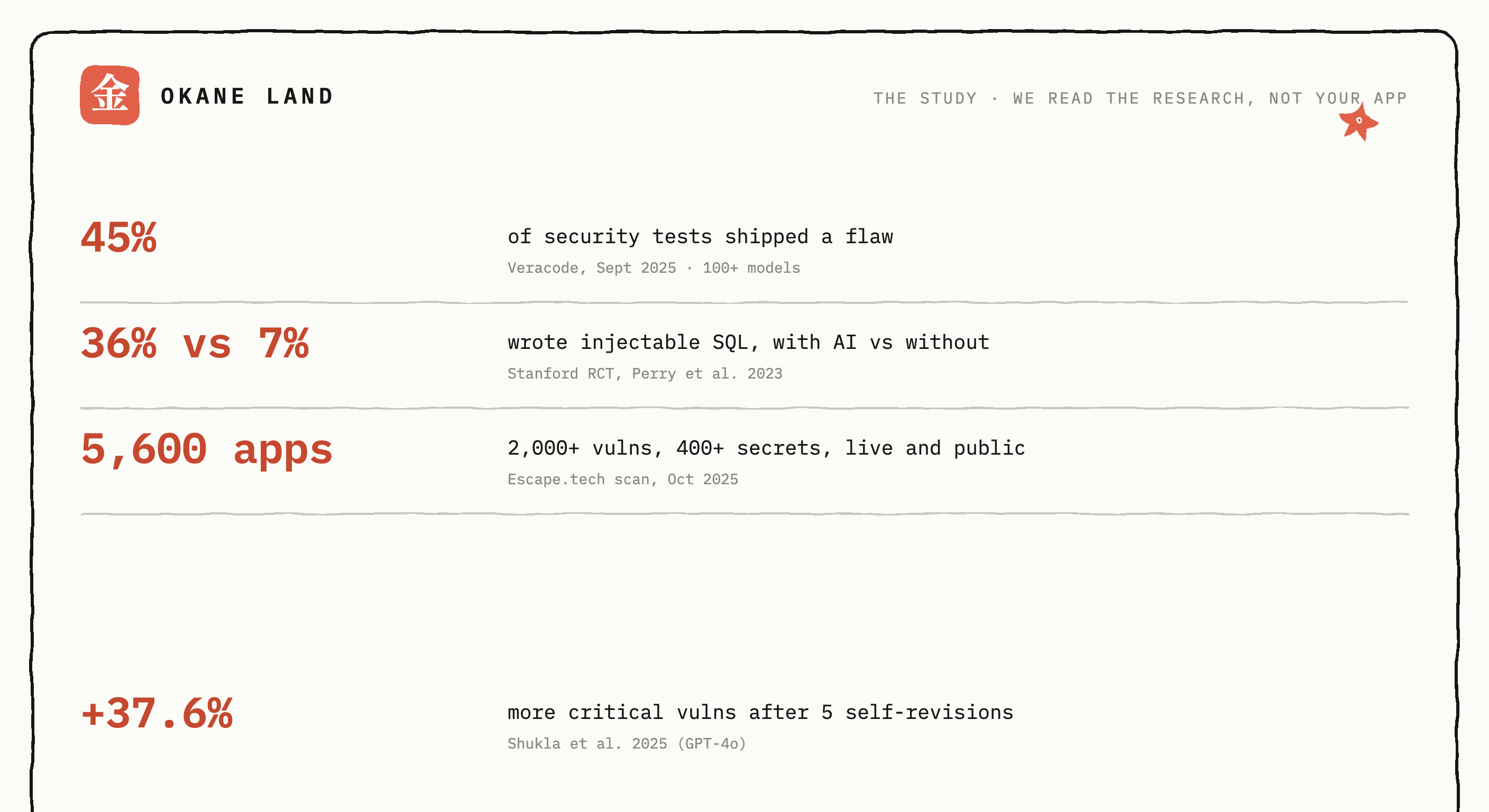
Is your vibe-coded app secure? Run this audit
On security-sensitive tasks, published tests show AI ships an exploitable flaw in roughly 45% of cases, and the sharper danger is that it makes you feel safer while it happens. We read the security research so you can audit your own app. Here is what breaks, why, and an eight-point check you run yourself.
Economics
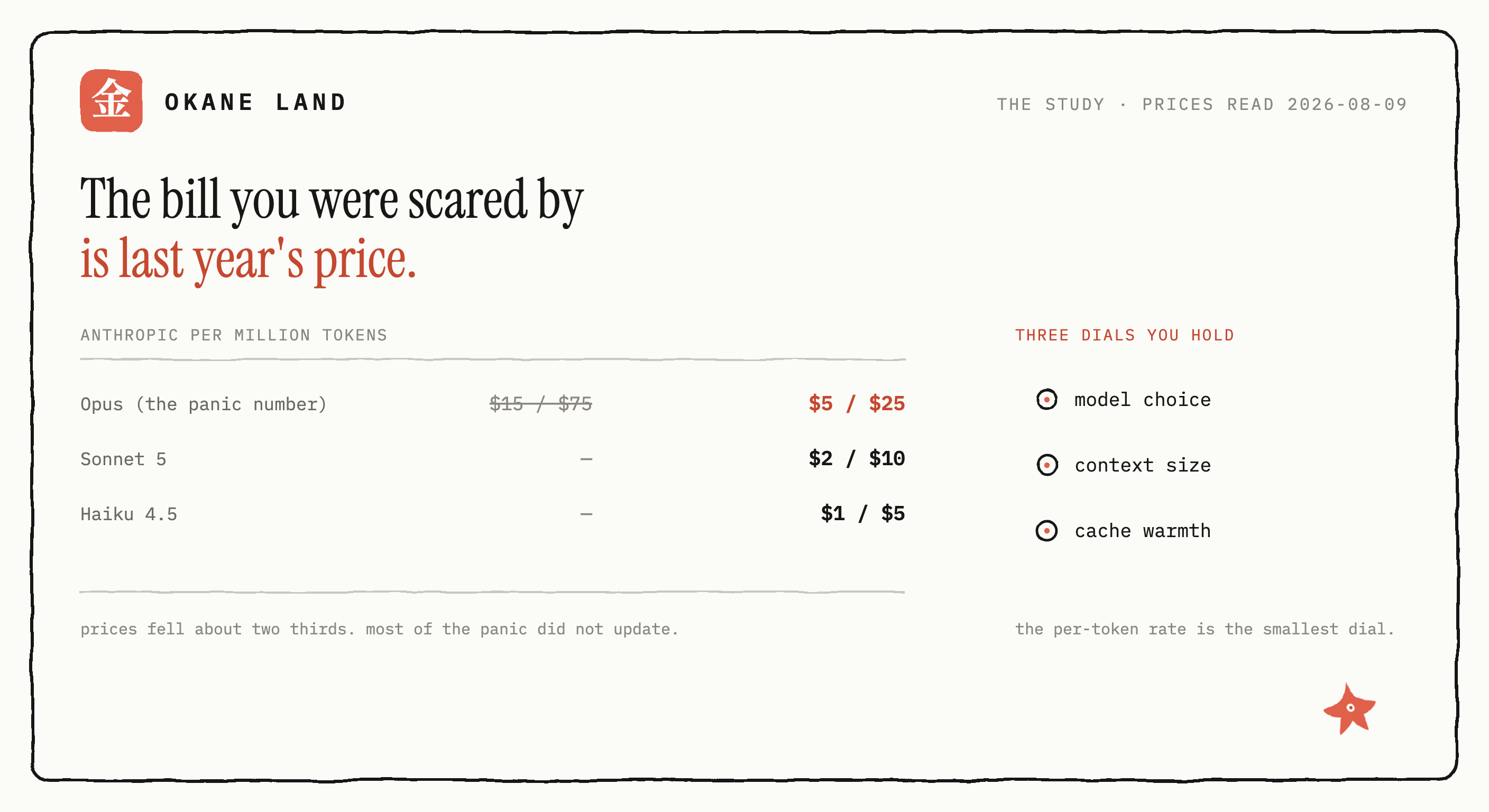
How to cut your AI coding bill
The scary numbers going around are mostly 2025 prices for a model that has since been retired. At August 2026 rates your bill is set by three dials you control, not by the vendor being greedy. Here is what everything costs now, the one arithmetic that decides subscription versus API, and the four moves that actually move the meter.
Economics
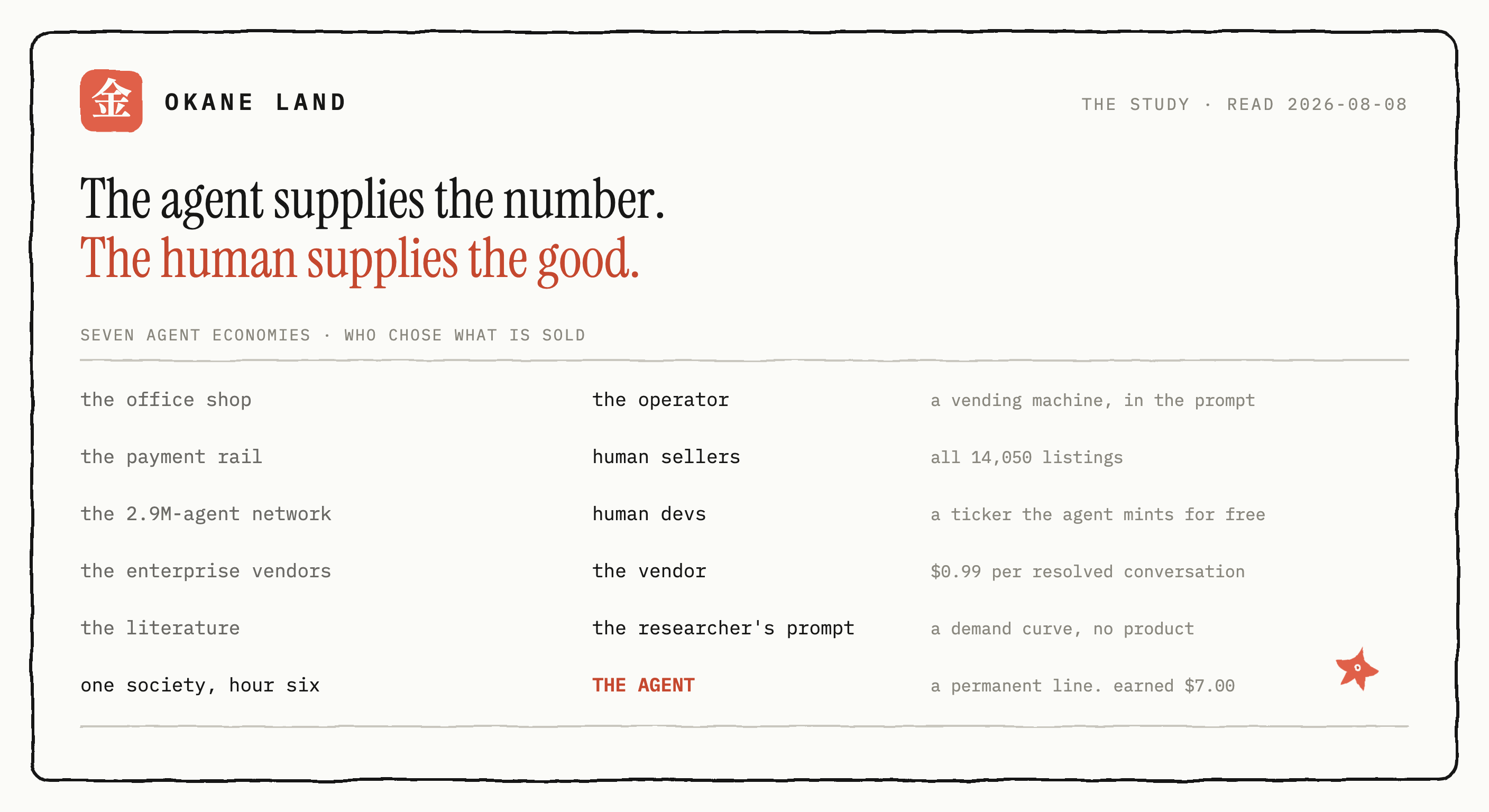
AI agents do not choose what to sell. They fill in a number a human left blank.
We opened seven agent economies and read the money to primary sources: a shop, a society, a payment rail with 14,050 listings, a network with 2.9 million agents, and the academic literature. In all of them the agent supplies a price and almost never the product. Where real customers turned up, they paid for the joke about the agent rather than the work it did. Fourteen million agent-to-agent trades have cleared $107,206.

Explainer
Is distribution really the moat? What actually defends an AI product
Android and Search placement carried Gemini from a twentieth of the AI market to nearly a fifth in a year, while Copilot stayed pinned near 1.2% despite shipping inside Windows. Same year, same distribution-wins slogan, opposite results. The rule that explains both: distribution is a moat only when it is owned or embedded and sits on a product people keep opening. Every channel you merely rent can be repriced or switched off by its owner overnight.
Economics
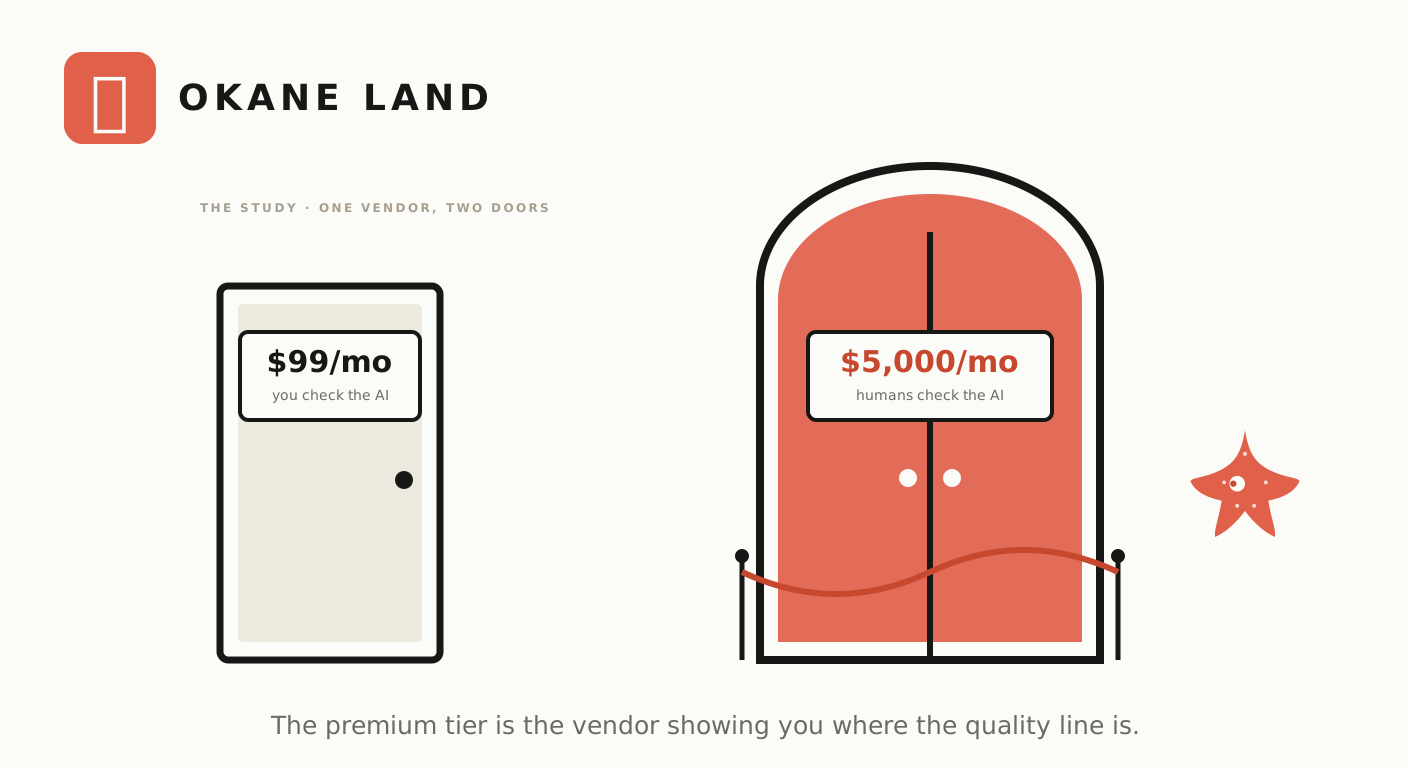
The $5,000 tell: AI vendors are selling you human QA for their own AI
We bought the $99 plan of an AI ad tool and read the meter while its cloning agent worked. The run was the small finding. The bigger one is a single line on the vendor pricing page, where the top tier charges roughly fifty times our plan for the one thing the agent cannot promise: work with the AI mistakes taken out.

Explainer
The year Claude subscribers sued over limits is the year the limits mostly went up
We reviewed 2,122 posts from Claude subscribers across Reddit and Hacker News. The strange year on the record: a silent squeeze, then weekly caps, then a lawsuit over what the tiers deliver, and then the limits mostly went up. The only per-plan numbers ever published are in the table inside; here is how to buy around the rest.

Explainer
Is vibe coding dead, or just renamed? What the record shows
No. Usage of the practice sits at all-time highs while the word gets demoted from a name for everything to a name for the casual end. The record: a dictionary crowning, a coiner walking his own term back, a Google whitepaper splitting it in two, and a search-interest handoff we measured ourselves.

Explainer
The new SDLC with vibe coding: what Google's paper actually says
Google published a 51-page whitepaper redrawing the software lifecycle around AI agents: same phases, new bottleneck, and a formal line between vibe coding and agentic engineering. We read the whole thing, traced its numbers to their sources, and translated the framework for a builder working alone.

Comparison
What a customer actually costs: CAC by channel for a one-person AI product
Every channel has a number, and almost every published number is sold to you by someone who wants you to pick their channel. The grounded figures run near $800 a customer for paid search, about $205 for SEO, and close to zero cash for owned channels, and whatever any of them buys an AI product churns about 30% faster. The answer for a one-person AI product is the channel your own time can run.

Explainer
Perplexity Pro limits: the shrinking $20 plan, in 1,024 posts
We coded 1,024 posts from Perplexity subscribers across five communities. The pattern is one quota cut after another on the $20 tier, a routing scandal the CEO called an engineering bug, and a cancellation wave that is still visible in search data. Pro remains the tier to buy, checked, month to month.

Economics
Does building in public actually pay?
An audience can sell a product for you, and it can just as easily inflate one that was never selling. The evidence splits on a single variable: building in public multiplies a product that retains, and it multiplies nothing when there is nothing under it.

Explainer
What a ChatGPT citation is worth, and which answer engine a small site can win
AI answer engines send about one visit for every 170 Google sends, and 84% of that is ChatGPT, but Semrush measured those visitors converting around 4.4 times better. A citation is worth having, and the reachable field favors a small, specific, freshly dated page, so it earns a place in the plan rather than the center of it.

Explainer
Is vibe coding worth it? What the numbers say
Yes: controlled trials measure 26% to 56% faster on fresh builds, and an $80 million exit came out of a six-month-old solo product. Two habits, a scheduled cleanup pass and a security baseline you keep honoring, decide whether the speed stays yours.

Economics
AI takes two-thirds of venture money, and your odds are still one in six
AI companies took 65% of US venture dollars in 2025, and almost none of it landed where a small team stands. The terms underneath did not move: about 20% of the company a round, a Series A bar near $3 million in revenue, roughly one seed round in six reaching an A within two years. Raise only if two of three hold: a market that punishes patience, a product that needs capital, odds you accept.

Economics
The AI UGC ad math: $2 a video, and the bill nobody prices in
AI UGC tools price a finished spokesperson clip at $1 to $11 against about $185 for a human creator video, a real cost collapse. But the strongest independent test found AI ads under-indexed on sales by 5 points while human ads over-indexed by 11. The bargain holds for one job, cheap disposable hook testing at volume, and breaks when the ad needs a real claim, a real feeling, or a testimonial a regulator could read as fake.

Explainer
AI saves about 3% of your hours, and almost none of it reaches the money
AI genuinely speeds up the right tasks: writing, support, structured drafts. But across a real job the gain shrinks to about 3% of your hours, and a paycheck captures just 3 to 7% of it. AI will make you faster. It will not make you richer on its own, and the saved hours only become money if you deliberately bank them.

Explainer
AI agents finish a third of the job, and the math says why
The demos are real and the leaderboards are climbing fast. Turned loose on real multi-step work, though, the best agents finish about a third of it, and the cause is compounding: at 95 percent reliability per step, a 20-step task comes out right about 36 percent of the time. On a leash, agents already pay. Off it, an agent that works half the time is a tool you supervise.

Economics
Wrap an LLM, charge $20, lose money: the pricing trap the model owners hit first
Charging a flat $20 for a metered product is a subsidy with a leak: a few heavy users burn most of the tokens, and the average stops protecting you. The model owners themselves learned it and moved to usage based pricing. Falling inference costs lower the whole curve without changing its shape, so a wrapper only earns if you price for the user who runs the meter hot.

Explainer
AEO and GEO: one real study, a pile of mythology, and a traffic cliff
Generative and answer engine optimization are mostly the SEO industry reselling one controlled study, which found citations, statistics and named quotes lift AI visibility up to 40% while keyword stuffing lands about 10% below the do-nothing baseline. The llms.txt and schema tactics move nothing. What survives is being worth citing and being mentioned where AI reads, and no tool sells you that.

Explainer
AI coding: faster MVP, slower review, and the security bill nobody mentions
AI coding made GitHub trial developers 55.8% faster building a web server from scratch, made experienced developers 19% slower on code they knew cold, and pushed team review time up 91%. Same tools, opposite results: the situation is the variable, and your own sense of speed is not a reliable guide to which one you got.