The Study · Explainer
What a ChatGPT citation is worth, and which answer engine a small site can win

Two numbers frame the whole question. In June 2025, AI platforms sent about 1.13 billion referral visits to the top 1,000 sites on the web, up 357% in a year. Over that same month, Google search sent those sites roughly 191 billion. So AI referral traffic is growing fast and is still about one part in a hundred and seventy. If you are a small site deciding whether to chase a spot in an AI answer, that is the tension: a channel too small to live on, growing too fast to ignore, and one where the rules of who gets picked are not the rules you learned for Google. The evidence lands on the encouraging side: a citation is worth winning, and the field is more open to a small site than the traffic split suggests.
Two questions the tools rarely separate: what a citation is worth when you get one, because the traffic is scarce but does not behave like search traffic, and whether a small, specific site can realistically win one or the box is already carved up among Wikipedia, Reddit, and a few giants. The method is the one we used on AEO and GEO: trust the people measuring the gap over the people selling the fix.
The short version
If you are shipping to earn and weighing AI search as a channel, the evidence supports a small, specific set of moves.
- A citation is worth more per visitor than a search click. Semrush measured AI-search visitors at about 4.4 times the value of organic visitors by conversion rate. The multiple varies a lot by market, but the direction is consistent: people who arrive from an AI answer tend to be further along.
- The channel is really ChatGPT. It drives roughly 84% of trackable AI referral traffic and rising. Any plan that treats “AI search” as one even market is planning for the wrong shape.
- The engines cite different worlds. Only about 11% of cited domains overlap between ChatGPT and Perplexity. Winning one does not win the others, so pick the engine your buyers use.
- A quarter of the citations are gone before you start. Wikipedia and Reddit together are about 25% of US ChatGPT citations, and you cannot become Wikipedia. The remaining field is where a small site competes.
- In that field, small and fresh wins more than you would expect. AI-cited pages run about 26% fresher than the top organic results, niche pages beat big domains on specific queries, and the one controlled study found that sourced, specific writing lifts citations the most for lower-ranked pages.
Everything below is the evidence, including the parts that argue with the bullets.
What a citation is actually worth
Start with the value, because it is the reason the small traffic number is not the whole story. Semrush studied more than 500 high-value topics in June 2025 and found that a visitor arriving from an AI search engine was worth about 4.4 times an organic search visitor, measured by how often they converted. The likely reason is selection: by the time someone clicks a link inside an AI answer, the assistant has already done the comparing and the summarizing, so the click that survives is a warmer one.
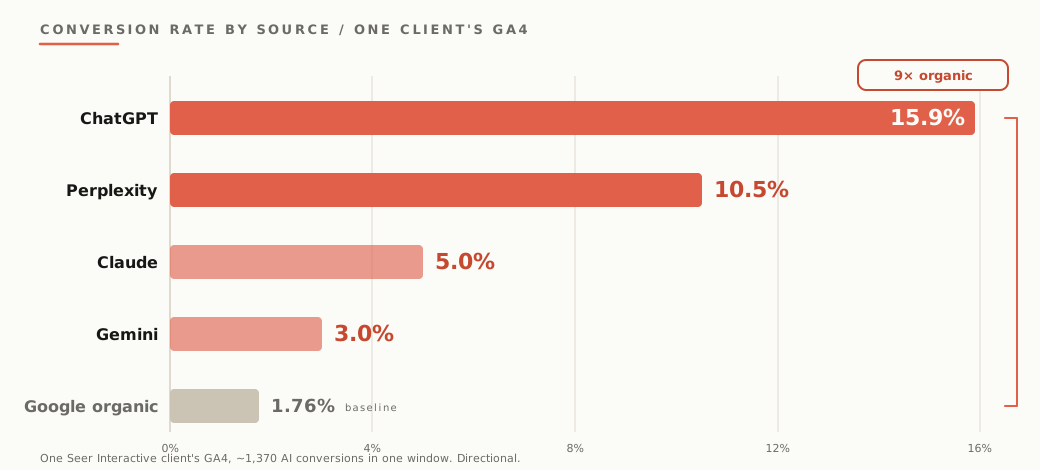
The exact multiple is where you have to be careful, because it swings hard by market. On one Seer Interactive client’s analytics, AI-referred sessions converted far above the site’s 1.76% organic rate, with ChatGPT at 15.9%, Perplexity at 10.5%, Claude at 5.0%, and Gemini at 3.0%. That is a striking spread, and it is one account over one window with only about 1,370 AI conversions behind it, so read it as directional rather than a benchmark.
A B2B-focused vendor report put the raw gap at 14.2% for AI referrals versus 2.8% for organic, which is almost certainly inflated by branded, high-intent traffic. Adobe’s retail data lands far lower, with a conversion lift in the tens of percent rather than multiples. Put the three together and the defensible claim is narrow: AI visitors convert meaningfully better than search visitors, the premium is largest in B2B and software, and anyone quoting you a clean “five times” is rounding up from one dataset.
The catch is that a citation is not a click. Most AI answers name a source without sending anyone anywhere, so the visit you can measure is the small tail of the value you got. That makes AI search a brand channel first and a traffic channel second, which is worth pricing carefully before you pour effort into it. If you want the per-channel acquisition math against paid and organic, that lives in what a channel costs.
The channel is really one engine
“AI search” sounds like a market with several players. The traffic says otherwise. Previsible’s study of 6.77 million sessions across 166 properties put ChatGPT at about 84% of trackable AI referral traffic in December 2025, climbing toward 92% by May 2026. Conductor’s separate tracking landed at 87.4%, and the lowest credible estimate still puts ChatGPT near four out of five referrals. The share moves by industry and by month, and B2B has seen ChatGPT dip while Perplexity and Google’s AI mode pick up, but the center of gravity is not in doubt.
That has a blunt implication. If you optimize for the abstract idea of “answer engines,” you are spending most of your effort on the 15% and calling it a strategy. The engine that decides whether AI search is a channel for you is ChatGPT, and the second question, which engine your specific buyers use, matters more than the first. A developer-tools audience skews to Perplexity and Google’s AI mode far more than a consumer audience does.
The engines cite different worlds
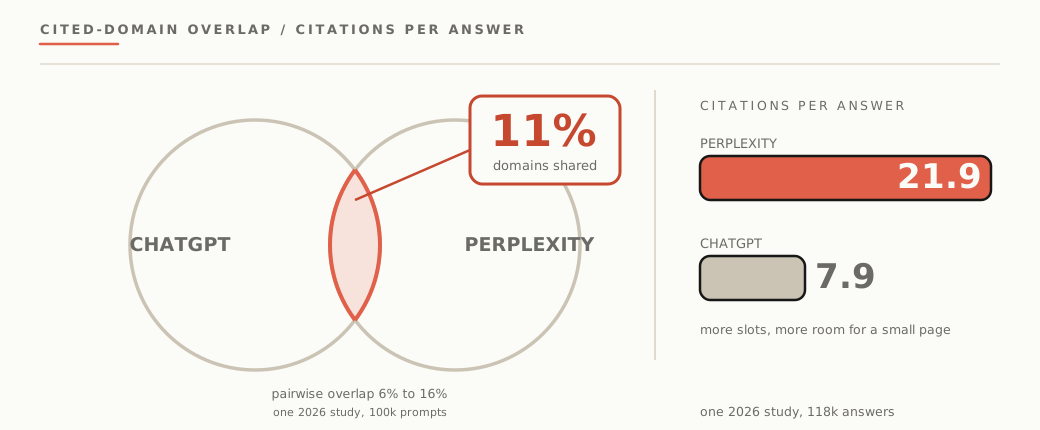
Here is the part that breaks the “get cited by AI” framing. The engines do not draw from a shared pool. Profound compared 100,000 prompts and found that ChatGPT and Perplexity overlapped on only about 11% of cited domains, with pairwise overlap across the major engines running from roughly 6% to 16% depending on which two you compare. Getting cited in one is close to no signal about the others. There is no single “AI visibility” you win once.
They also cite in different volumes. Perplexity packs an answer with sources, averaging about 21.9 citations per response, against ChatGPT’s roughly 7.9. More slots per answer means more room for a specific, lower-authority page to make it in, which is one reason Perplexity is the friendlier target for a small site even though it sends less traffic than ChatGPT.
And a large share of the field is closed to you before you begin. In 5W Public Relations’ Q1 2026 audit, Wikipedia and Reddit alone were over 25% of US ChatGPT citations, with the Wall Street Journal, New York Times, and Bloomberg absent from the top 20 entirely. Ahrefs and Semrush both rank Reddit and Wikipedia as ChatGPT’s two most-cited domains by a wide margin. You cannot become Wikipedia, and a marketing page cannot pass as an organic Reddit thread. So the realistic contest is for the citations that are not going to those sources, which is where the small-site question finally gets interesting.
Why a small, specific site can win
The reachable field rewards exactly the things a large content operation is bad at. Three separate lines of evidence point the same way.
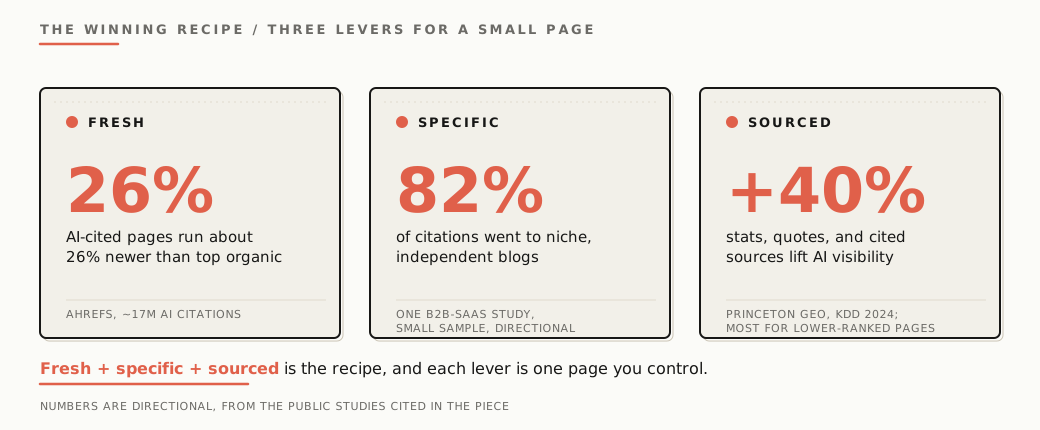
Freshness is the first. Ahrefs analyzed about 17 million AI citations and found AI-cited pages ran roughly 26% fresher than the top ten organic Google results, with ChatGPT showing the strongest pull toward recent content. Seer’s recency study found about half of Perplexity’s citations came from current-year content and roughly 80% from the last three years. A caveat keeps this direction rather than settled: in the larger Ahrefs dataset, Perplexity’s cited pages skewed older than ChatGPT’s, so “the freshest engine” depends on the study. The safe reading is that recency helps across engines, and a dated, regularly updated page has a structural edge over an evergreen one that has not been touched in two years. This is why our price index carries a visible update date and change log.
Specificity is the second. One 2026 study of business-software queries by DerivateX looked at the pages ChatGPT cited and found about 82% went to independent or niche blogs and vendor pages, against 8.8% to major media. The sample was small and limited to B2B software, so treat the exact figure as directional, but it matches what the engines reward elsewhere: a narrow page that answers one specific question tends to beat a broad, high-authority page that answers it in passing.
The third is causal, and it is the strongest anchor because it is the one controlled experiment in the field. The Princeton GEO study tested rewrites across about 10,000 queries and found that adding statistics, direct quotations, and cited sources raised a page’s AI visibility by up to 40%, with the largest lift going to lower-ranked pages. That last detail is the whole opening for a small site: the tactics that move citations help the underdog most. The one thing this evidence does not give you as a hard number is the common advice that being mentioned on third-party sites drives citations. That is real in practice and worth doing, but treat it as experience rather than a measured statistic.
What to do with this
The moves that follow from the evidence are short, and none of them require a GEO subscription.
- Price it as a brand channel and target one engine. Decide which engine your buyers use, usually ChatGPT for consumer and Perplexity or Google’s AI mode for technical audiences, and stop spreading effort evenly across all of them.
- Be the specific page rather than the broad one. A page that answers one exact question with real numbers and named sources is what the reachable field rewards, and it is what the controlled study measured lifting citations most.
- Date it and keep it current. A visible update date and a genuine refresh cadence turn recency from a disadvantage into an edge. If you use Perplexity to check your own visibility, here is how to read those numbers.
- Get mentioned where the engines already read. Being talked about on the third-party sites and communities an engine trusts moves more than markup does, which is the finding that survived our AEO and GEO review.
A citation from ChatGPT is worth having. It is worth more per visitor than a search click, it is growing fast, and the reachable part of the field genuinely favors a small, specific, current site over a big stale one. It is also a narrow, ChatGPT-shaped, mostly clickless channel, so it earns a place in the plan rather than the center of it. Build the page a person is glad they clicked, because the click is the scarce part, and the trust behind it is the only asset that compounds.
One email, when there's something worth sending
Get the research in your inbox.
No fixed schedule, no filler. You get an email when we've tested something, run the numbers, or found a tool worth your time.
Free. Double opt-in, unsubscribe in one click.
Chasing AI citations for your own site? Get the research →
Sources & how we researched this
- Semrush (June 2025), We Studied the Impact of AI Search on SEO Traffic. Here's What We Learned (500+ high-value topics; AI-search visitors about 4.4x the value of organic by conversion rate). semrush.com/blog/ai-search-seo-traffic-study
- Opollo (2026), The 2026 AI Search Benchmark Report (312 tech firms; 14.2% conversion for AI referrals vs 2.8% for Google organic; single-vendor, B2B). opollo.com/blog/the-2026-ai-search-benchmark-report
- Similarweb, via TechCrunch (July 2025), AI referrals to top websites were up 357% year over year in June, reaching 1.13B (top 1,000 domains; Google still sent about 191B). techcrunch.com
- Seer Interactive (2025), Case Study: 6 Learnings About How Traffic From ChatGPT Converts (one client's GA4 data: ChatGPT 15.9%, Perplexity 10.5%, Claude 5.0%, Gemini 3.0% vs Google organic 1.76%). seerinteractive.com
- Previsible (2026), 2026 AI Traffic Study, reported by Search Engine Land (6.77M sessions, 166 GA4 properties; ChatGPT about 84% of trackable LLM referrals in Dec 2025, rising toward 92% by May 2026). searchengineland.com
- Conductor (2025), AI referral traffic share (ChatGPT 87.4% across 10 industries). digiday.com
- Profound (2026), Answer Engine Citation Overlap Strategy (100,000 prompts; about 11% cited-domain overlap between ChatGPT and Perplexity, 6% to 16.4% across engine pairs). tryprofound.com/blog/citation-overlap-strategy
- 5W Public Relations (2026), Citation Source Audit Q1 2026: Wikipedia (13.15%) and Reddit (11.97%) drive over 25% of US ChatGPT citations; WSJ, NYT and Bloomberg absent from the top 20. prnewswire.com
- Semrush (2025), The Most-Cited Domains in AI (230,000+ prompts, 100M+ citations, Jul to Oct 2025; Reddit and Wikipedia dominate ChatGPT, with a September 2025 shift). semrush.com/blog/most-cited-domains-ai
- Ahrefs (2025), The Most-Cited Domains in ChatGPT (9.6M queries, Sept 2025; Reddit and Wikipedia first and second by a wide margin). ahrefs.com/blog/most-cited-domains-in-chatgpt
- Qwairy (2025), Provider Citation Behavior Q3 2025 (118,101 answers, 669,065 citations, 8 providers; Perplexity about 21.9 citations per answer, ChatGPT about 7.9). qwairy.co/blog/provider-citation-behavior-q3-2025
- Ahrefs (July 2025), Do AI Assistants Prefer to Cite Fresh Content? (about 17M citations; AI-cited pages about 26% fresher than the top 10 organic results). ahrefs.com/blog/do-ai-assistants-prefer-to-cite-fresh-content
- Seer Interactive (June 2025), Study: AI Brand Visibility and Content Recency (5,000+ cited URLs; about 50% of Perplexity citations from current-year content, about 80% from the last three years). seerinteractive.com
- DerivateX (2026), B2B SaaS AI citation study (169 cited URLs across 40 categories on ChatGPT web search; about 82% of citations to independent or niche blogs and vendor pages, 8.8% to major media).
- Aggarwal, Murahari, Rajpurohit, Kalyan, Narasimhan, Deshpande (2024), GEO: Generative Engine Optimization. KDD 2024 (about 10,000 queries; adding statistics, quotations, and cited sources lifted AI visibility up to about 40%, most for lower-ranked pages). arxiv.org/abs/2311.09735
- First Page Sage (2026), AI Conversion Rates: ChatGPT vs Gemini, Claude and Perplexity (150+ companies, 32 industries; a broader per-engine dataset). firstpagesage.com