The Ledger
The craft of earning with AI: pricing, selling, growth, and the economics that decide whether a product makes money. Researched and evidence-first, what holds up versus what just sounds good, for the vibe coders, founders, and marketers doing the work.

Selling
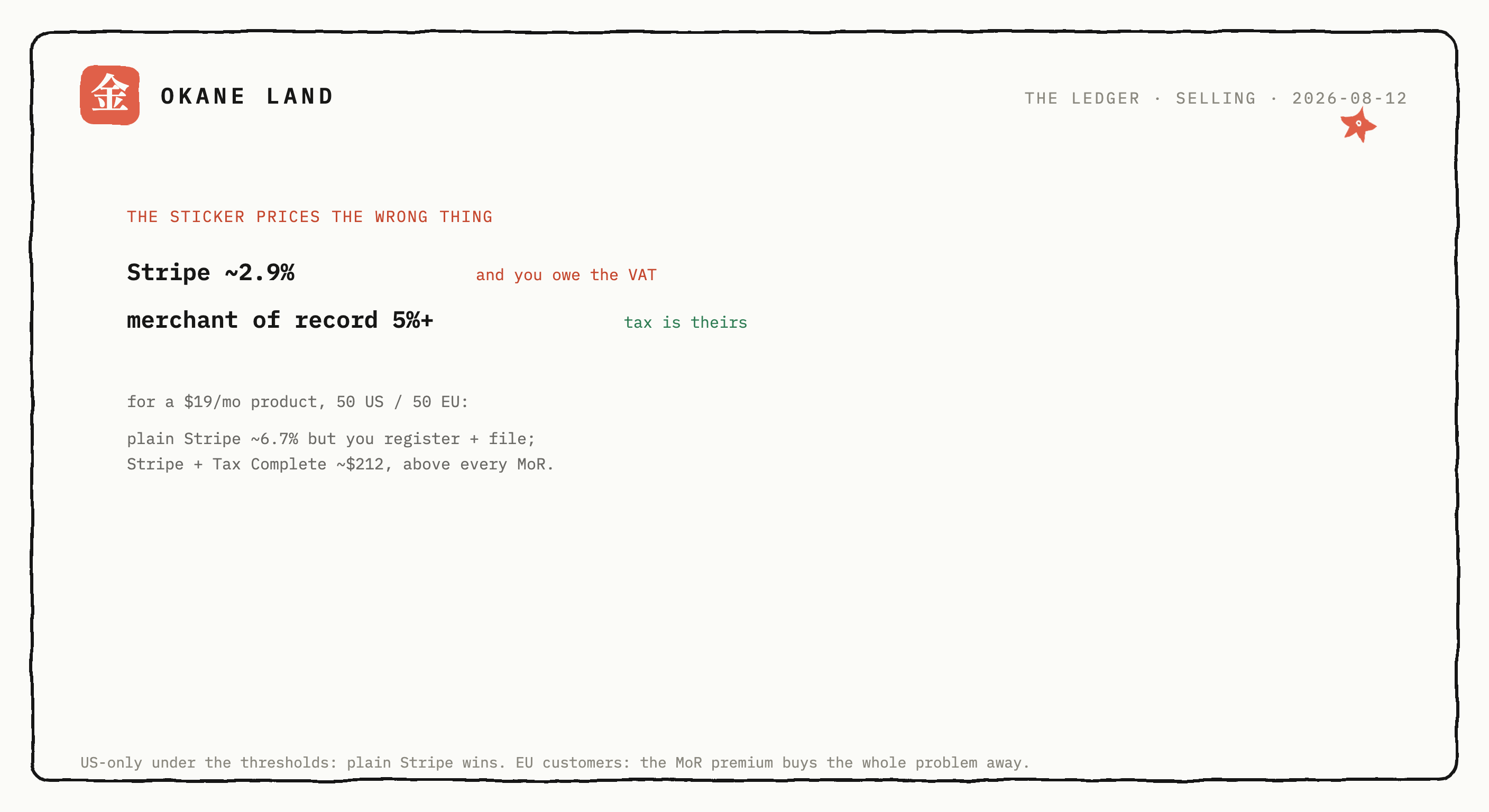
Stripe or a merchant of record: the checkout decision
Stripe wins the sticker comparison, 2.9% against 5%-and-up, and loses the real one, because the sticker is not the product. On Stripe you are the merchant of record, which for a solo product with EU customers means VAT from the first sale, quarterly filings, and add-ons that are priced separately. Here is the fee math six ways, with the tax liability each one does or does not take off your plate.
Pricing
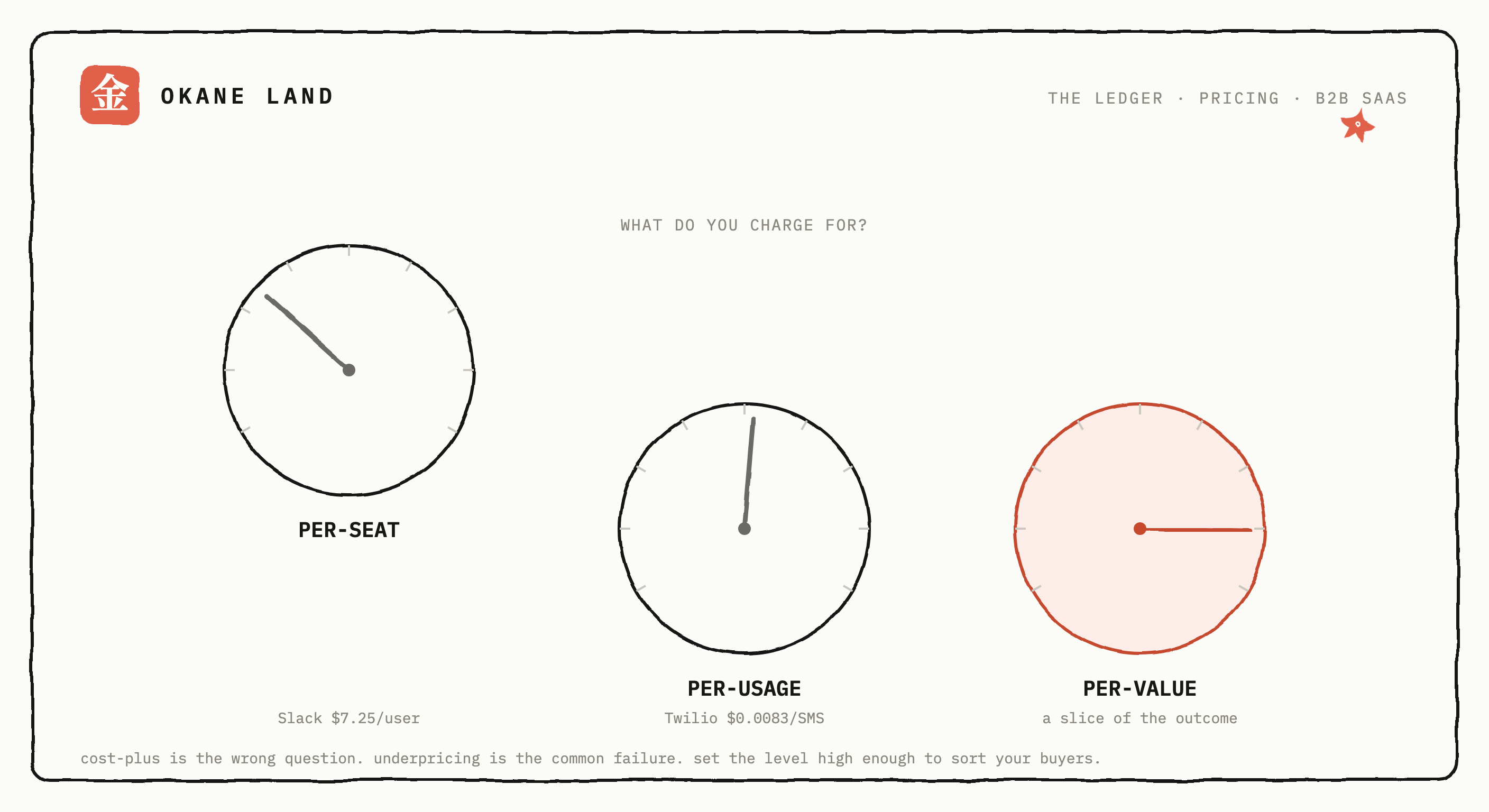
How to price a B2B SaaS
The hardest pricing decision is not the number, it is the meter. Whether you charge per seat, per unit of usage, or per unit of value decides whether your bill grows with the account or fights it. Get the meter right, then set the level high enough that price sorts your market instead of just discounting it.
Growth
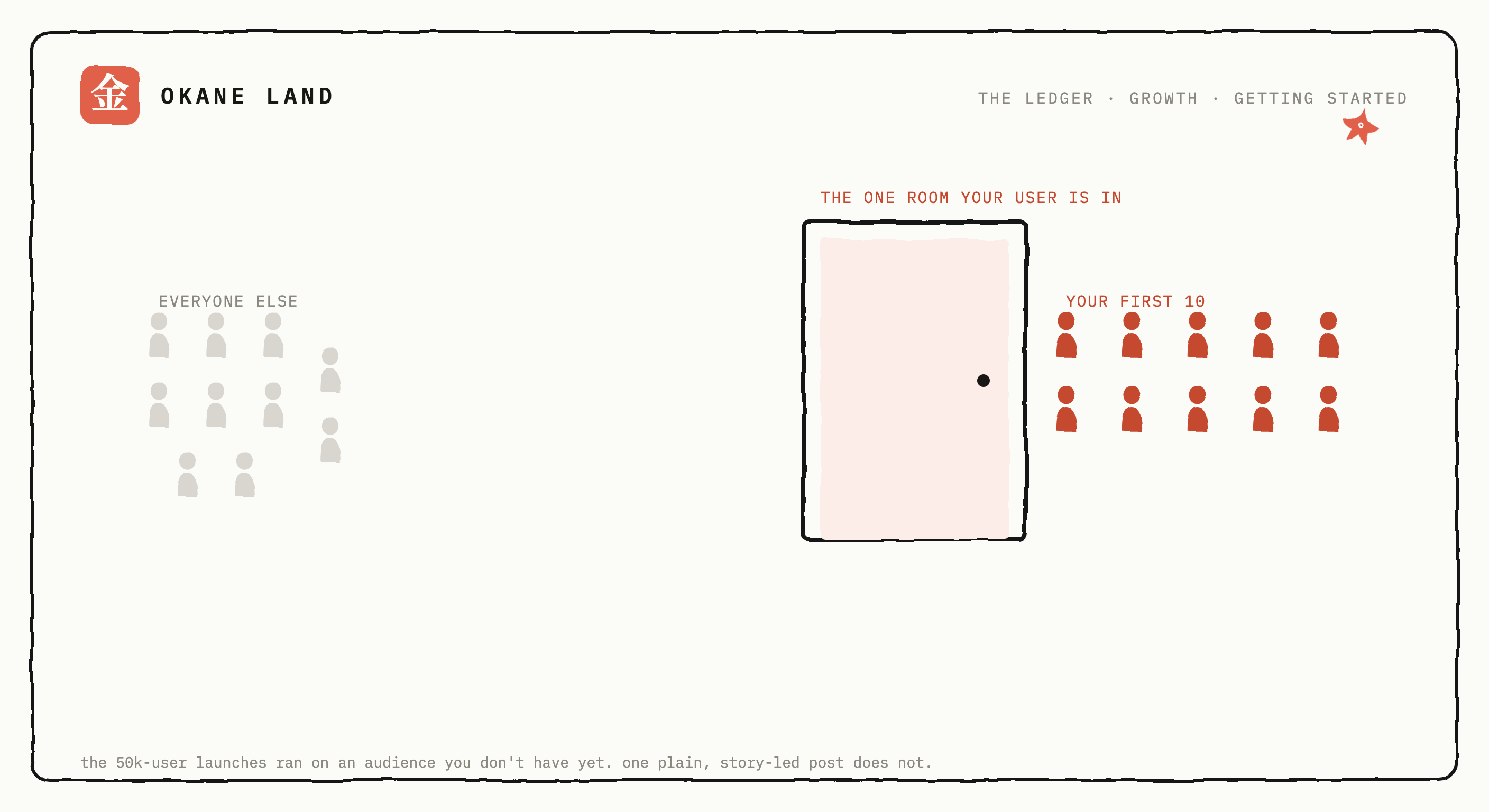
How to get your first 10 users
The first-users stories everyone quotes are survivorship. PhotoAI, a 50,000-user launch, a $40k first month all ran on an audience or a prior product that was already there. Strip those out and a repeatable pattern is left for someone starting from zero: one plain, story-led post in the single room your user already lives in, plus people you can name by hand.

Freelancing
Getting paid for AI work: deposits, deadlines, and the clients to refuse
Nonpayment is not a freak event; it is the base rate. Half of surveyed freelancers had collection trouble in a single year, the average victim loses about $6,000 annually, and a contract alone still leaks. The fix is structure installed before the work: deposits, pause clauses, handover on final payment, and a refusal list for the clients who signal early.

Selling
Productize the service: turn bespoke AI work into one thing you can sell twice
Brett Williams runs Designjoy alone: one design subscription at one posted price, $4,995 a month, no employees, and past $1.7M a year on it. The believable ceiling for a solo AI version of the model sits nearer $8,000 a month, and the distance between freelancing and either number is an offer standardized enough to be bought on trust.

Freelancing
The demo is the cheapest part: scoping AI work so it does not lose money
Quoting off the demo is how AI work loses money: the 80% underneath, eval to maintenance, never shows on the call, and 57% of agencies leak $1,000 to $5,000 a month to work they did and never billed. The discipline that stops the leak is written into the quote before you sign.

Freelancing
The retainer ladder: from one-off AI builds to income that repeats
Managed-service shops have billed business IT this way for twenty years: $100 to $200 per user per month, with floors that keep the smallest client worth serving. The AI version is the same insurance sold smaller, a few hundred euros a month per client, and it turns the one-off build from the whole business into the first rung.

Income
The economics of a one-person AI business: what the MRR screenshots leave out
Gross margins projected near 52 percent, 6.1 percent monthly churn under $25, card fees, failed payments and VAT all sit between MRR and income. The biggest lever on what you keep is price: charge enough to clear the churn cliff, then plug the leaks you already pay for.

Pricing
Pricing your AI app: the psychology that holds up, and the tricks that fall apart
You shipped the thing. Now what number goes on it? The $0 entry tier holds up in a field study, price as a quality signal is real but modest, and the middle plan gets shakier once the options are messy, while lucky 7s, countdown timers and the coffee-a-day line have nothing solid under them. The builders who get paid picked a number they can defend, tested it on real buyers, and ignored the rest.

Pricing
What to charge for AI work without lowballing yourself
Hourly, fixed, or value based: AI cut writing time about 37% and coding time 55.8%, so billing the clock hands your gains straight to the tool. Price the outcome instead, anchor with a range and write the scope boundary into the number, and you keep the upside of being fast.

Selling
How to land your first AI client
US firms using AI to produce what they sell sit at 8.8%, and nearly 82% of the smallest say it does not apply to them. That objection survives a cold DM and a slide deck. It dies at a warm lead plus a working demo of their own workflow, with their own data, because the pitch stops being a claim about AI and becomes a claim about their Tuesday.