The Ledger · Growth
How to get your first 10 users
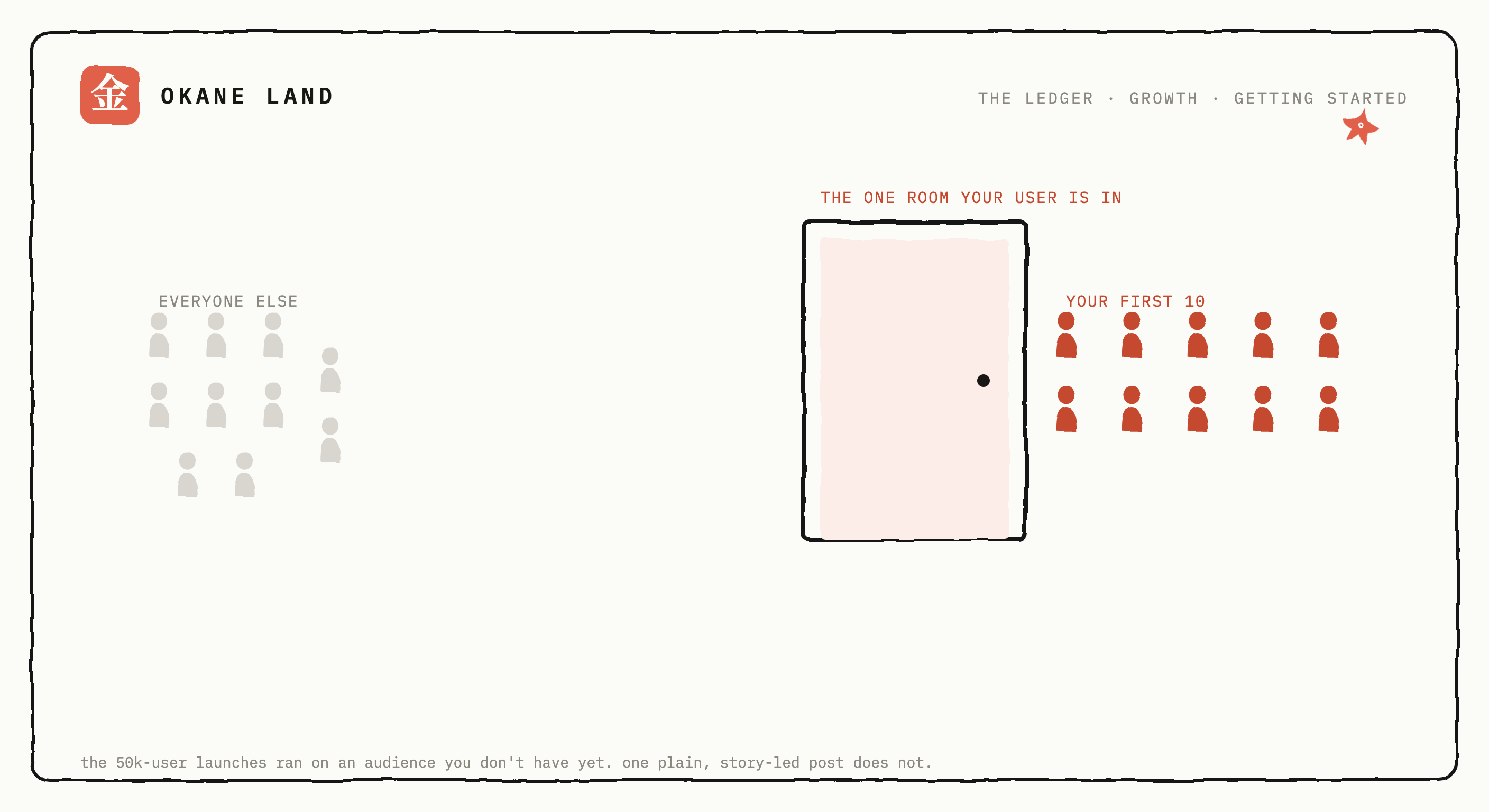
One number from the first-users threads is worth more than all the famous ones: 112. That is how many signups one builder on Indie Hackers reported from a single Reddit post, about 1.14 percent of its 9,900 views, with no audience behind it. No launch-day spike, no following, one story told in the right room.
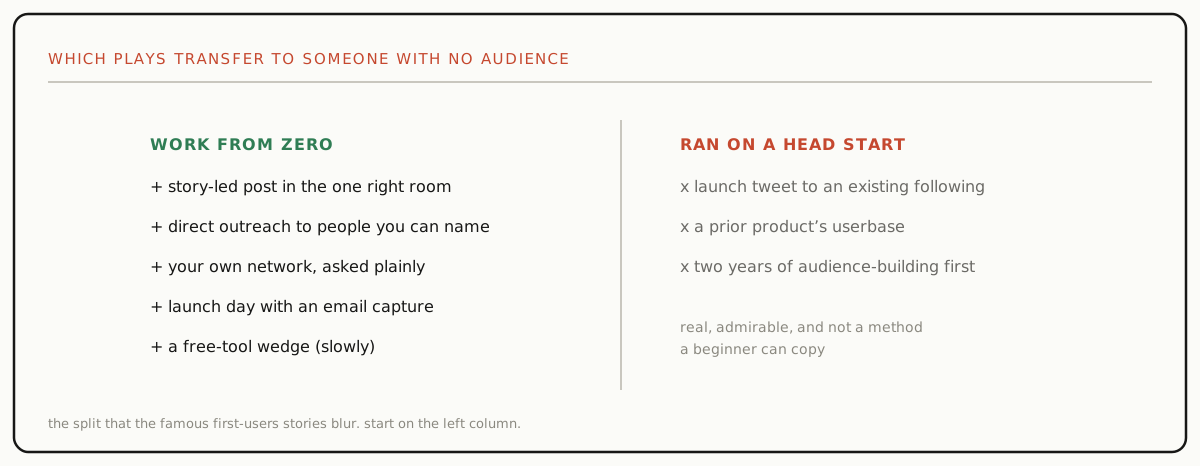
The numbers everyone quotes instead are bigger and mostly useless to a beginner: 15,000 users in 24 hours, $40,000 in a month. Each ran on an audience that existed before the product did. This piece separates the plays that need that head start from the ones that work from zero.
The short version
- If you have no audience, your first ten users come from one place plus one list. One plain, story-led post in the single community your target user already gathers in, and direct outreach to people you can name by hand. That is the whole transferable method.
- The famous stories do not transfer, and quoting them at a beginner is quietly misleading. The 50,000-user launches and $40k first months ran on an audience or a prior product that already existed. Those are outcomes of distribution you do not have yet, not a way to get it.
- We tested none of this. Every tactic below belongs to a named builder with their own number and a status label. Okane Land did not run these experiments, audit the revenue, or verify the signups. We collected the receipts and separated the ones a zero-audience beginner can actually copy from the ones they cannot.
- The one thing every case shared was not a channel or a growth hack. It was a real, specific problem felt by a group the builder could name. Without that, none of the plays below fire.
The uncomfortable truth about the stories you have read
Open any “how I got my first users” thread and you will meet the same handful of legends. A photo-restoration app that hit tens of thousands of users in days. A boilerplate that made forty grand in month one. A solo builder pulling six figures a month. They are real, and they are the wrong template, because each one had a distribution engine running before the launch you are being told to copy.
Hassan El Mghari’s restorephotos reached roughly 15,000 users in 24 hours off a single tweet, because that tweet landed in front of an existing following. Marc Lou’s ShipFast reported about $40,000 in its first month, after roughly two years of building an audience first. Jason Tan’s Engage AI added about 2,000 users in a week, drawn from a browser extension that already had around 7,000. Read as “how to get your first users,” these mislead. Read correctly, they all say the same thing: the users came from distribution the builder had already earned. So the real split is between the plays that need an audience you do not have, and the plays that work from zero. The rest of this piece is the second list.
Pick the single room, then earn the right to post
Before any tactic, one decision does most of the work: which single place does your target user already gather? Not “Reddit” but the one subreddit. Not “Discord” but the one server. A tool for dungeon masters lives in a different room than a tool for tax preparers, and posting in the wrong one is why most “I launched and got nothing” stories end where they do.
Then earn the right to be there. The lesson from Partizion’s first-users writeup is that the builders who succeed contribute to the room before they ask anything of it, and often message the moderators first. A community can smell a drive-by launch, and it punishes one. Spend a week being useful in the exact place your users already are, and your single ask stops reading as spam.
The zero-audience play that actually transfers
Here is the move that works without a following: the story-led ask, not the pitch. One builder on Indie Hackers reported 112 signups from a single Reddit post, about 1.14% of its 9,900 views. What made it work was that it led with why the thing was built, the specific frustration behind it, rather than a feature list and a link.
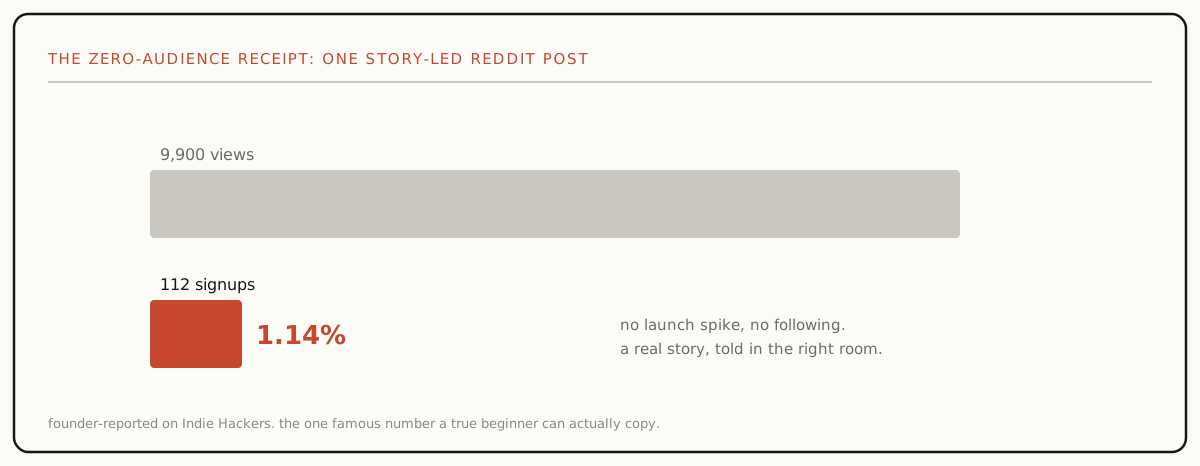
The mechanics are copyable. Tell the story of the problem as you actually lived it, show the thing you made in response, and ask for feedback rather than signups. A post that opens with a real, particular annoyance the room shares will out-convert a launch announcement every time, because the room recognizes itself in it. This is the one play a true beginner should master first, because it needs no audience, no budget, and no prior product. It needs a real story and the right room, which Step 1 already found.
The first handful comes from a list of names
The first few users often do not come from any post at all. They come from a list of names.
Two moves here. First, direct outreach: find people who are visibly living the problem, on Product Hunt, in the subreddit, in a related tool’s community, and message them individually, referencing their specific situation rather than blasting a template. Builders have assembled their first cohorts this way one conversation at a time. Second, your own network: the “friends of the first ten.” Map the people you already know who have the problem, or who know someone who does, and ask them directly. It feels too small to matter, which is exactly why most people skip it and then wonder where their first users were hiding. If you have not already, landing your first paying client runs on the same warm-lead muscle.
Use launch day as a catalyst
Show HN and Product Hunt are worth doing, with the right expectation. They are a spike, not a strategy. One builder traced roughly thirty of their earliest users to a single Show HN. The mistake is treating the spike as the plan, because the traffic arrives once and leaves, and if you captured nothing you are back to zero the next morning.
So the value of launch day is entirely in what you build around it. An email capture on the page, a reason for the spike to leave an address, a follow-up for the people who clicked but did not sign up. The launch is a moment of attention you get to convert into something durable, or waste. Plan the capture before you plan the post.
The free-tool wedge
The last transferable play is engineering-as-marketing: build a small, free, genuinely useful thing that sits in front of your paid thing and pulls the right people toward it. A free calculator, a single-purpose utility, a programmatic page that answers a query your user is already searching. It is the door, and the paid product is the room behind it.
The caveat is the one that matters. When you read that Engage AI added 2,000 users in a week, remember that wedge fed off a prior 7,000-user extension. For you, from zero, the free tool is a slower door than it was for someone who already had traffic to point at it. It compounds, but it does not spike, and it pairs best with the distribution thinking that turns a one-time wedge into a standing channel.
What not to expect
Three things to hold onto. The stories you admire are survivorship: you are seeing the builders whose distribution worked, not the far larger number whose identical launch reached no one. The audience-first cases genuinely do not copy, so measuring your day-one launch against someone’s forty-grand month is comparing your start to their two-year head start. And the cost of each channel is not zero even when the channel is free, because your time is the spend.
What every case did share is the part that is easy to miss under the numbers: a real problem, felt sharply, by a group the builder could name. Get that right and the story-led post in the one room, plus the handful of names you reach by hand, is enough to find ten people who want the thing. Ten is not a growth strategy. It is proof that the problem is real, which is the only thing that makes the next ninety worth chasing.
One email, when there's something worth sending
Get the research in your inbox.
No fixed schedule, no filler. You get an email when we've tested something, run the numbers, or found a tool worth your time.
Free. Double opt-in, unsubscribe in one click.
Where did your first users come from? Get the research →
Sources
| Source | Link |
|---|---|
| Indie Hackers, "first 10 users" builder threads (read 2026-08-09): self-reported first-user accounts. One builder reported 112 signups from a single story-led Reddit post, about 1.14% of 9,900 views. Numbers are founder-reported and unaudited. | indiehackers.com ↗ |
| Hassan El Mghari (@nutlope), restorephotos.io: self-reported ~15,000 users in 24 hours and ~50,000 in about 10 days off a single launch tweet, no paid ads. An audience-first case: the launch tweet reached an existing following. REPORTED. | github.com ↗ |
| Marc Lou, ShipFast: built an audience over roughly two years before launching, then reported about $40,000 in the first month. The pre-existing audience was the prerequisite, not the launch. REPORTED (self-reported revenue). | shipfa.st ↗ |
| Jason Tan, Engage AI: reported about 2,000 new users in one week, drawn largely from a prior ~7,000-user browser extension. Engineering-as-marketing that ran on an earlier product's userbase. REPORTED. | engage-ai.co ↗ |
| Pieter Levels (@levelsio): reports roughly $300,000/month across a portfolio of products. The most-quoted indie case and the clearest survivorship anchor: years of shipping preceded it. REPORTED. | levels.io ↗ |
| Partizion (Ryan Rhoten), "How I got my first users": the community-entry lesson, ask the moderators and contribute before you post, so your one ask is welcome rather than spam. | partizion.io ↗ |
Show your work: if a number can't be shown, we don't print it.