The Ledger · Freelancing
Getting paid for AI work: deposits, deadlines, and the clients to refuse

An automation builder opened a client’s invoicing dashboard by accident this month and found a little over $40,000 sitting past sixty days, some past 120, inside a business doing $35,000 a month and stressing about payroll. The owner’s explanation for not chasing it: these are good clients, you know? That thread is 129 points of builders recognizing someone they know, and the reason this piece exists. Getting paid is not a fight you have after the work; it is a system you install before it, and the cheapest part of the system is refusing the client who signals, early and clearly, that they were never going to pay well. Here is the base rate, the structure, the new laws that back you, and the refusal list, with receipts.
The short version
- Nonpayment is the base rate, not bad luck. In the Freelancers Union’s 5,000-person study, half of freelancers had collection trouble in a single year, 71% hit it at least once in their career, and the average victim loses about $6,000 a year, roughly 13% of income.
- A contract alone still leaks. In the 2022 New York survey, 38.8% of freelancers with a contract still had payment trouble. Paper without structure is a receipt for the dispute, not a prevention of it.
- Structure means sequence. Deposit before work, milestones before handover, and the finished thing, credentials, admin access, the repo, changes hands on final payment, never before. The AI twist: you deliver faster now, so the gap between your invoice and their urgency is wider than ever.
- The law grew teeth while nobody was watching. Illinois (July 2024) and New York (August 2024) now require written contracts and payment within 30 days for freelance work over $500 and $800 respectively. If your client is in either state, the floor is statute.
- The best collections are the clients you refuse. The red flags repeat across every horror thread: haggling the deposit, vague scope plus urgency, unanswered basic questions, and the new one, the client who opens with what AI should make cheap.
The base rate nobody prices in
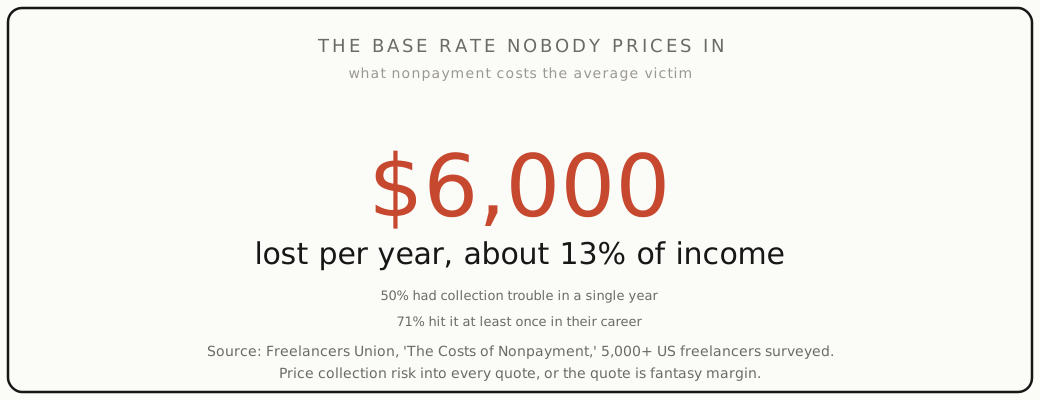
Price a project without pricing collection risk and you are quoting fantasy margin. The best-sized study is the Freelancers Union’s Costs of Nonpayment, 5,000-plus US freelancers: one in two had trouble collecting in a single year, 71% at least once in their career, and the average affected freelancer lost almost $6,000 annually, about 13% of income. The 2022 New York survey run with six creator guilds is grimmer: 91% experienced late payment at least once, 62% had been stiffed entirely at least once, and 54% had waited three months or longer.
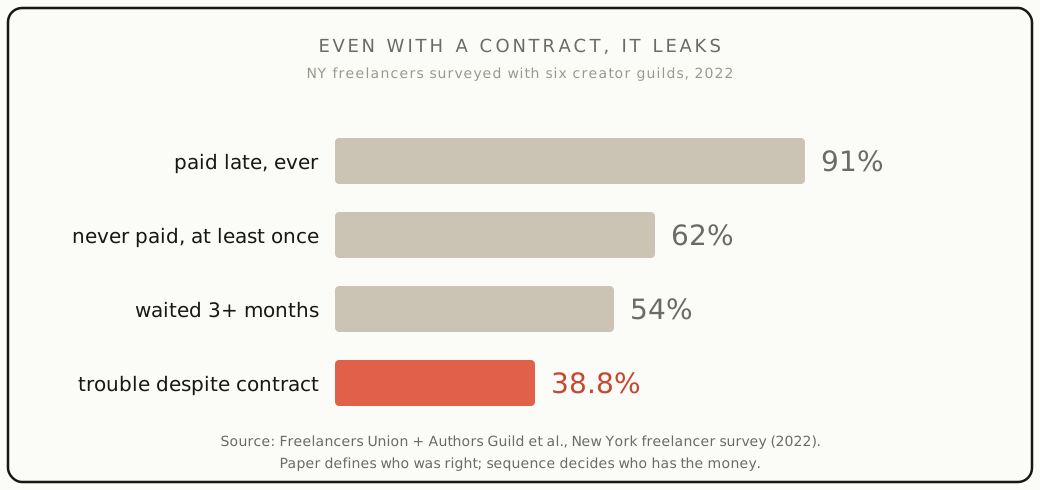
The number that should change your behavior is the last one in that survey: among freelancers who had a written contract, 38.8% still had trouble getting paid. A contract is necessary and insufficient. It defines who was right; it does not decide who has the money. Sequence decides that.
Why good people don’t chase
The $40K dashboard is not a deadbeat-client story; it is a seller-psychology story. The owner was not owed by enemies. He was owed by “good clients” he did not want to make things awkward with, which is how receivables age past 120 days inside a business sweating payroll. If you recognize yourself, and most solo builders should, the lesson is that chasing is emotionally expensive, so the system has to make chasing unnecessary. You will not send the awkward email; the structure has to send it for you.
The other half of the psychology is on display in the thread that named this piece’s problem: a builder, mid-chemotherapy, sent the same basic-information request five times over three weeks while the client who had begged for the project went quiet. The work was never the hard part. Extracting attention, decisions, and money from someone who wanted the outcome more than they wanted the process, that is the job the invoice sits at the end of. Both stories argue the same thing from opposite sides: what happens after delivery is decided by what you set up before it.
The structure that collects
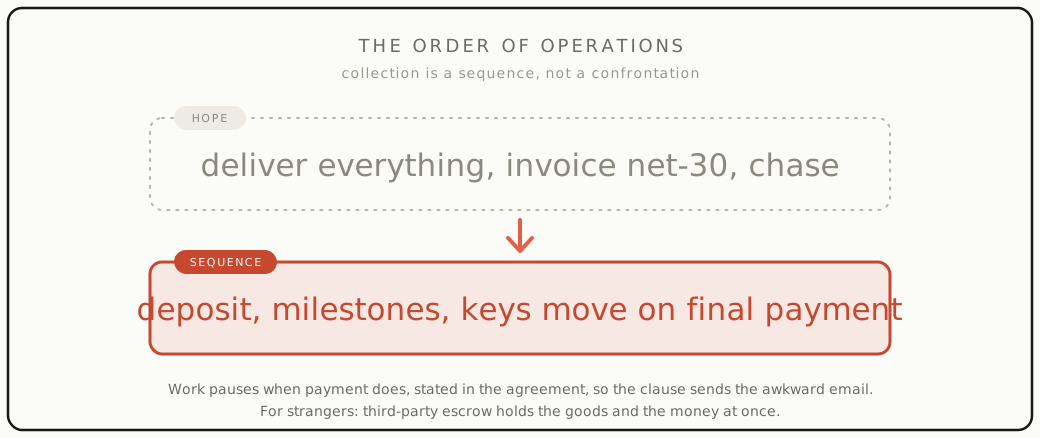
The system is four rules, and none of them is aggressive; they are just the order of operations that removes hope from the process.
- Deposit before work. For a new client, a third to half up front; nothing starts before it lands. The deposit is not primarily cash flow, it is a test: the client who haggles the deposit is showing you the invoice fight in advance, for free. Scope the milestones so each payment buys a defined slice, not a vibe.
- Milestones, not a balloon. A 30/40/30 shape means no single unpaid invoice can hold your month hostage, and every payment renews consent on both sides. On AI timelines this matters double: when the build takes days instead of months, one balloon invoice at the end means all the risk lands after all the work.
- Work pauses when payment does. Stated in the agreement, enforced without anger: a missed milestone pauses the project. This is the clause that sends the awkward email so you do not have to.
- The keys move last. Deliverables, credentials, repo access, and admin rights transfer on final payment, never before. The seller who handed a buyer admin access first and watched them vanish learned the oldest rule in trade: whoever holds the goods and the money at the same moment decides how the story ends. For strangers and one-off deals, a third party holds both: escrow services handle transactions from $100.
Two small pieces of hardware finish the machine. A late fee, stated up front, typically monthly interest disclosed on the contract and invoice, because its job is deterrence, not revenue. And short terms: net-15 where you can get it. The businesses most likely to pay slowly are the ones counting on net-30 as a free loan.
The law finally showed up
For decades the advice ended with “get it in writing and hope.” The floor moved in 2024. Illinois’s Freelance Worker Protection Act took effect July 1, 2024, the first statewide law of its kind: written contracts required for freelance work of $500 or more, payment due within 30 days of completion. New York’s statewide Freelance Isn’t Free Act followed on August 28, 2024: a written contract is mandatory once a client’s work reaches $800 within 120 days, payment is due by the contract date or within 30 days, and the state provides a model contract and a formal complaint path, with remedies for nonpayment that can include double damages and attorney’s fees.
If your client is in New York or Illinois, cite the statute in your terms; it costs nothing and reframes 30 days from a courtesy into a law. If they are elsewhere, the statutes are still useful as the norm you point to: this is what the two biggest freelance jurisdictions in the country now consider the minimum.
The refusal list
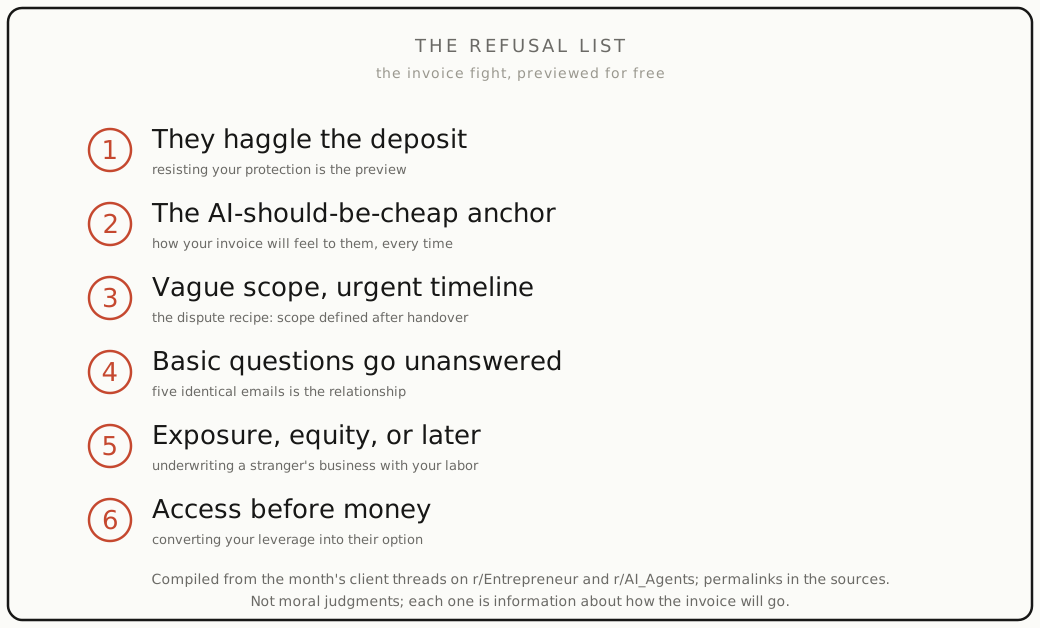
Every collections disaster in the threads announced itself early. The signals, in the order they usually appear:
- They haggle the deposit. Not the price, the deposit. Price negotiation is normal; resisting the structure that protects you is a preview.
- They open with what AI should make cheap. The client who anchors on “this is a quick AI thing now” is telling you what your invoice will feel like to them at every milestone. Price the outcome and hold it; the discount-hunter’s project always costs more than it pays.
- Vague scope, urgent timeline. “We need it yesterday” plus “we’ll figure out the details” is the exact recipe for the dispute where they define the scope after your work is in their hands.
- Basic questions go unanswered. Five identical emails for onboarding information is not friction, it is the relationship. A client who cannot deliver information will not deliver payment on a schedule either.
- Payment in exposure, equity, or later. Revenue-share offers from strangers are asking you to underwrite their business with your labor. If you would not invest cash in their company, do not invest a build.
- Strangers who want access first. Whoever asks you to hand over the working thing, the credentials, or the admin seat ahead of money is asking you to convert your leverage into their option.
None of these is a moral judgment; each one is information about how the invoice will go. The point of a first client is to start the flywheel, and a bad first client stalls it worse than no client, because they consume the calendar the good one would have paid for.
The walk-away math
Refusing work feels expensive until you price the alternative with real numbers. The average nonpayment victim in the Freelancers Union data loses about $6,000 a year, and that understates the solo builder’s case, because the loss is never just the invoice. A bad client consumes the three scarce assets of a one-person business: calendar weeks that carried your whole capacity, the emotional budget that chasing burns, and the referral energy a good project would have generated. Against that, the cost of the refusal list is occasionally passing on a project that would have paid fine. That trade is not close, and the builders who have run both sides of it, the ones filling those hundred-comment threads, all converge on the same sentence: some clients just are not worth it.
The quiet endgame, once the structure works, is needing it less. Deposits and pause clauses protect projects; retainers replace the collection problem with a subscription, which is why the ladder ends there. Bill first, sequence the keys, refuse the flags, and let the awkward email be a clause instead of a confrontation. Getting paid is positioning, set before the first hour of work, and like every pricing move that holds up, it works because it was decided while you still had the leverage.
One email, when there's something worth sending
Get the research in your inbox.
No fixed schedule, no filler. You get an email when we've tested something, run the numbers, or found a tool worth your time.
Free. Double opt-in, unsubscribe in one click.
What finally got you paid? Get the research →
Sources
| Source | Link |
|---|---|
| Freelancers Union, The Costs of Nonpayment (5,000+ freelancers surveyed) | blog.freelancersunion.org ↗ |
| Freelancers Union and six creator guilds, New York nonpayment survey (2022) | blog.freelancersunion.org ↗ |
| Authors Guild, summary of the 2022 NY survey (62% never paid at least once) | authorsguild.org ↗ |
| NY Department of Labor, Freelance Isn't Free Act | dol.ny.gov ↗ |
| Venable LLP, New York State Freelance Isn't Free Act explainer | venable.com ↗ |
| Littler, Illinois Freelance Worker Protection Act (first statewide law) | littler.com ↗ |
| r/AI_Agents, the client with $40K in unpaid invoices who refused to chase them | reddit.com ↗ |
| r/Entrepreneur, 'Some clients just aren't worth it' (the five unanswered emails) | reddit.com ↗ |
| r/Entrepreneur, scammed twice: admin access handed over before payment | reddit.com ↗ |
| Bonsai, freelance late-fee norms (stated up front, monthly interest) | hellobonsai.com ↗ |
| Escrow.com, third-party escrow from $100 transactions | escrow.com ↗ |
Show your work: if a number can't be shown, we don't print it.